

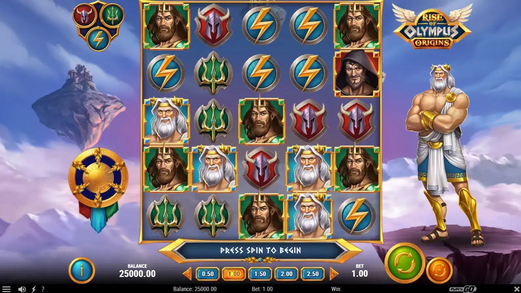





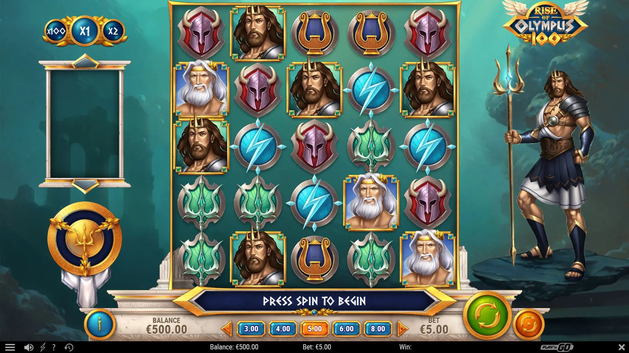
Rise Of Olympus 100 Slot Demo in Poland
Get to know the Rise Of Olympus 100 slot in training mode, set tempo and limits, and then enter the game consciously in Poland.
How to Approach Rise Of Olympus 100 Demo in 2026
Imagine firing up the game for just “a minute,” and ten minutes later, you don’t even remember what you tested. That’s normal—slots can draw you in with rhythm, and in 2026, most sessions happen on mobile phones during brief breaks between tasks. To make the demo meaningful, start with a goal: do you want to learn the symbols, test the tempo, or just see how a special round looks? One task at a time. First, open the rules and review exactly what triggers features, which symbols are special, and how the game signals key moments (counters, animations, hints). Only then run a series of spins at a single bet without jumping between settings. While doing so, observe what nudges you to speed up—boredom, frustration, the urge to “catch up”? This self-monitoring is invaluable, because real issues usually stem not from mechanics but from emotions. And if you're playing on a platform available in Poland, control over session length is precisely what lets you keep entertainment within safe bounds and play in line with rules for adults only.
All promotional incentive structure is clearly stated in writing and/or via electronic means in an easily understood manner. All codes are accompanied by an explanation of what the code is for, who is eligible to use the code, and how it should be used. As such, players are less likely to be confused about what is required of them in order to receive a reward and how the reward will be applied after receiving it. The promotional incentives provided to participants provide them with time to become familiar with the gaming system's mechanics, their interface, and progress, before deciding how deeply they wish to become involved with this platform. Therefore, players are encouraged to participate in an informed manner, rather than being pressured or tempted to act quickly.
Rise Of Olympus 100 Demo Play – Stress-Free Test
Imagine you have 15 minutes and want to feel the game’s vibe, but don’t want to fall into “click-click-click” mode. Practice mode gives you virtual credits, so you can test the slot’s behavior risk-free. Do it wisely: set your session time, choose one starting bet, and only change it once after a predetermined number of spins to compare experiences. In demo, it’s not about hitting anything—it’s about understanding the flow: what happens on the board when tension rises, how special moments look, what precedes bigger events. If you catch yourself speeding up after a few empty spins, pause and take a break. This simple self-control exercise is vital—especially in 2026, when many play on mobile in short time windows—because such a break often determines whether a session stays pleasant or turns into chasing a win.
What to Check in Rise Of Olympus 100 Slot Demo Before Starting
Imagine you like precision: you want to log in, understand the game, and log out. A checklist helps. Check three things: whether the interface is readable, whether you understand special symbols, and whether you can quickly return to rules if something’s unclear. Start with settings: quick spins, sound, information display, bet changes. Then move to actual gameplay and observe the rhythm—how often small wins occur, how long losing streaks last, and what usually precedes stronger moments. Don’t draw “mathematical conclusions,” just note your impressions. If the game feels overly tense, slow down and shorten the session. If it’s too calm—or boring—check whether you’re playing auto mode without paying attention. Many people make this mistake: they confuse lack of emotion with “no point,” when often it’s merely a question of settings and play style. A well-set demo teaches you how to play, not how to dream.
How to Read Symbols and Features in Practice
If it’s your first time seeing a slot, symbols may look like nice pictures with no meaning. Imagine halfway through a session a sudden animation appears—and you’re unsure whether it’s important or just a visual effect. The solution is simple: after each “weirder” moment, pause and revisit the rules panel. Check which symbol triggered the effect and exactly what it activated. In practice, you learn faster when you don’t try to memorize everything at once. First grasp the basics (what pays out), then special symbols (what changes the layout), and finally bonus rounds (what builds tension). This way, the next session is shorter, because you’re not starting from scratch.
How to Test Tempo and Volatility Without Chaotic Moves
Players often do this: a few empty spins, then speeding up, then jumping the bet. Imagine driving a car and constantly shifting gears without reason—the experience will be poor, even if the road is good. In demo, blocks work better: 20–30 spins at one bet, then a break, then another block. While playing, watch how the game “breathes”: are small wins frequent, or are there long dry spells followed by sudden jumps? If you catch yourself thinking “just one more hit,” that’s a signal you need a time limit or shorter blocks. This isn’t moralizing—it’s simply practice that keeps sessions under control.
Quick 10-Minute Session Plan
Set a timer. Do 3 minutes of calm spins, 4 minutes observing special symbols, and 3 minutes checking settings and returning to rules. Imagine this as training for real play—it should give you control, not outcomes. After finishing, answer yourself in one sentence: what was clear, and what do you need to recheck?
Notes That Make Your Next Start Easier
Memory post-session can be selective—especially when playing in the evening. Write down three things: a comfortable bet, the tempo setting, and the moment when you felt the urge to speed up. Imagine returning tomorrow—thanks to your notes, you start with a plan, not chaos.
Registration, Budget, and Responsible Account Settings
Imagine the demo suits you, and you want to move to real-money play. The worst thing you can do is register in a rush and deposit immediately “on an emotional high.” Better to approach it like configuring settings: account, safeguards, limits—only then fund your account. The platform is available in Poland and operates within applicable rules, and the game should be treated as an adult entertainment activity. Determine your session budget beforehand—something whose loss won’t disrupt your plans. Then set deposit and playtime limits. These settings only make sense if they’re real, not “just in case.” If you plan future withdrawals, complete your profile data right away, because disorganization usually comes back at the most inconvenient time. In practice, players who do this calmly rarely contact support or get frustrated by formalities.
How to Set Up Your Account and Safeguards Without Errors
Imagine logging in on a new device, only to have something go wrong: password, email, confirmation—such details can drain your desire to play entirely. After registration, set a strong password, enable extra verification if offered, and check notifications so they don’t bombard you mid-day. Then move to responsible gambling settings and set time and deposit limits. Finally, match your profile details with your ID documents—no shortcuts. It’s boring, but it works like a safety belt.
Payment Methods and Deposit Control
Usually, choosing a payment method is about habit, but it’s worth considering control. Imagine you want to play briefly, but the transaction requires extra authorization—and everything falls apart. Check your bank or payment provider’s limits, data matching, and whether the method works smoothly on your device. If you like keeping your budget in check, consider solutions that separate entertainment funds from daily expenses. Below is a table with practical tips—no promises about processing times, as those often depend on the specific operator.
Solution | When Convenient | What to Check |
Debit/Credit Card | Fast funding and simplicity | Bank limits, online payments, data consistency |
Bank Transfer | Greater control and classic method | Recipient details, payment title, possible banking delays |
E-wallet | Separating the budget from the card | Verification, limits, and possible fees on the provider's side |
Mobile Payment | You mostly play on your phone | Authorization, daily limits, device security |
Prepaid Voucher | Upfront budget, without linking a bank account | Denominations, usage rules, top-up availability |
Limits, Breaks, and Self-Exclusion
If you play sensibly, limits don’t hinder you—they help. Imagine having a worse day and a desire to “switch off” with a click. In that moment, it’s easy to exceed the time you planned. A time limit and deposit limit act like a brake, and a break helps you return to your normal rhythm. Do you recognize that moment when you say, “Just one more moment”? That’s precisely when a previously set brake proves useful. It’s also beneficial to know where in the dashboard you can find tools such as timed breaks and self-exclusion—even if you don’t plan to use them, mere awareness makes a difference.
Withdrawals, Support, and Common Issues
Imagine finishing a session and wanting to withdraw funds, only to find the process has additional steps. Many people immediately feel tense, as they expect “click and done.” It’s better to approach withdrawals like a procedure: check your details, choose a method, confirm, and monitor the status. Avoid changing the method mid-withdrawal, as this can complicate matters. If something is delayed, don’t send five messages at once. Gather specifics: date, method, status, message—and only then contact support. In practice, this discipline shortens the resolution time because the agent doesn’t have to draw information out of guesses.
How to Initiate a Withdrawal and Check the Operation Status
Usually, what matters most is the place where you see progress—not just the balance. Imagine refreshing the screen every minute: tension rises, yet no new information appears. Instead, check the transaction history and order status. Before withdrawal, ensure your profile data is complete and consistent, as inconsistency can pause the process. If this is your first withdrawal, it’s sensible to test with a smaller amount to walk through the process stress-free. Afterward, stick to one method and don’t change your account settings while the request is being processed.
What to Do If the System Asks for Verification
If a request to confirm identity appears, don’t delay until the last moment. Imagine wanting to close a session before the weekend and missing just one document—it causes anxiety. Prepare clear images, verify that your profile data matches the documents, and avoid using other people’s payment methods. If support asks a question, respond concretely and without digressions: what you sent, when, and what you see in the status. This is the shortest route to resolution.
How to Effectively Describe an Issue to Support
Imagine a consultant who can’t see your screen. If you write “it doesn’t work,” you’ll receive a series of questions. Better to send a bundle of information right away: device, login method, event date, payment method, transaction status, and last message. Add what you’ve already tried (e.g., re-login, checking data) to avoid repeats. Stick to one thread, as scattered reports prolong resolution. A calm tone also helps—it’s a practice that typically resolves issues faster than emotionally charged messages.
Account and Device Security in 2026
Imagine logging in over a public network and suddenly getting logged out—the security systems may respond cautiously. Keep your OS, browser, and plugins updated, avoid suspicious add-ons, and log out after each session. Don’t save passwords on shared computers, never share verification codes, and regularly review activity history where available. It's also worthwhile to keep your budget organized: separate limits for entertainment and clear time boundaries reduce the risk of impulsive decisions. If you notice unusual activity, act immediately—changing your password and contacting support is a simple, effective step.
Most Common Mistakes and a Simple Plan for Your First Game
Usually, the number one mistake is lacking a plan—not a “bad slot.” Imagine entering for just a minute and ending up playing for an hour without a sense of control. The second mistake is jumping stakes; the third is skipping breaks. A simple plan looks like this: set a time, define a deposit limit, choose one starting stake, take a break after a set number of spins, and end the session regardless of the outcome. If you feel rushed, introduce a brake: put your phone away, stand up, and return in a minute. This seems basic, but in practice, it protects against impulsivity. Entertainment should be light—not heavy—which is why in 2026 routine and limits make the biggest difference.
Checklist Before a Gaming Session with Real Money
Imagine a checklist before a flight—you’re always missing something without one. Before starting, set your time and budget limits, find where your transaction history is, and confirm your profile data is complete. Choose a single starting stake and decide when to take a break. Decide in advance when to end your session before you start spinning. If the urge to “chase losses” arises, take a break and return only when your head is calm. Such a simple ritual keeps gaming as entertainment—not an impulsive habit.
FAQ
How to start a demo to get the most out of it?
Set a goal for 10–15 minutes and stick to one stake at first. Think of it like training: first, learn the rules, then a short series of spins, and finally, verify settings. Pause at unusual moments and return to symbol descriptions instead of guessing.
Are breaks worth taking if I’m playing just for fun?
Yes—breaks protect against automatic clicking. Imagine after a few empty spins you speed up without a plan—this is exactly the moment when tension increases. A one-minute break often suffices to return to calm decisions.
How to set a session budget without overdoing it?
Decide on an amount whose loss won’t affect your daily expenses, and treat it like an entertainment cost. Think of a cinema ticket—you pay once and don’t “chase” your money after the screening. Set deposit and session time limits in advance, when you’re not emotionally charged.
What to do if a request to confirm data appears?
Do it during a calm moment and prepare legible documents. Imagine rushing before the weekend—missing one file can prolong the process. Also check whether your profile data matches your documents, and avoid changing settings mid-process.
What to do if a withdrawal takes longer than expected?
First, check the status in the transaction history and ensure no additional requirements exist. Imagine bank-side delays—sometimes this is normal. If the status remains unchanged for too long, send one inquiry to support with date, method, and message.
How to best report a problem to support to get help quickly?
Provide specifics: device, date, payment method, status, and last message. Imagine the consultant doesn’t see your screen—they need facts, not emotions. Mention what you’ve already checked, and stick to one conversation thread.
How to recognize that I should stop playing?
If you’re raising stakes without a plan, playing longer than intended, or feeling irritation, that’s a signal. Imagine someone observing your decisions from the side—are they calm? Breaks, time limits, or temporary blocking help you return to healthy entertainment.